New website
Website refresh!
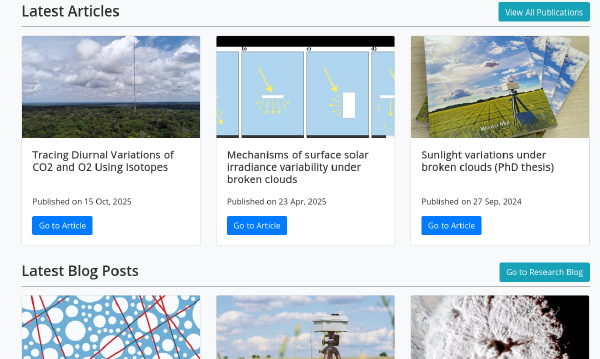
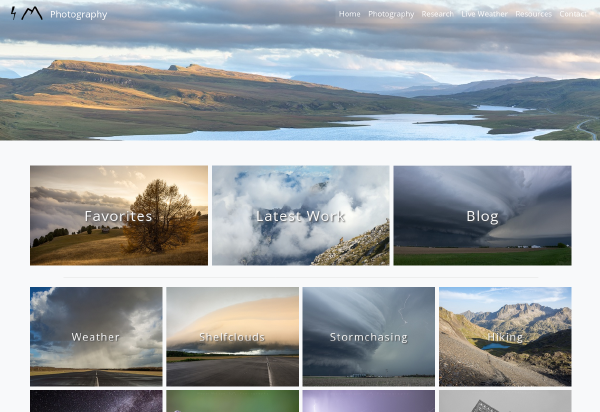
Not all content is finished (photography, weather resources), but the essentials and functionality are here.
It is written from scratch using Hugo, a bunch of markdown files, and a bit of styling and layout logic in html and css. No tracking, no cookies. The only bit of Javascript you will find in the photography gallery, required to display photos nicely. Other than that, this is a static, pre-rendered, lightweight pile of html.
Principially, all content on this website is written or made by me. After all, this is a personal website.
Why build a new website?
It became clear that Django was not the right tool for me anymore, and a static, markdown based website might be a better alternative.
Inspiration has come from years of Obsidian use, and seeing the CEO post on Twitter how he build his website on top of a bunch of markdown files. Here is Steph Ango’s website.
As I needed the following, after ~5 years of maintaining my old website:
- Simpler maintenance and content adding. Maintenance and adding new content as simple as possible
- Better security. Django requires a live server running with login and database management.
- No database management. Especially annoying as my development and production environments got out of sync.
- Easy migration to different server (in case my webhost does another bizarre price hike, for example).
How did I build it?
In short:
- Hugo (markdown files + jpgs) as static html generator
- Gemini 3 Pro for planning
- Gemini 3 Pro agent mode within VSCode + Github Copilot for building, Claude Opus 4.5 when Gemini 3 Pro failed
- ~90-95% of code for the project is written by LLMs (which proves this is not a complicated setup)
- Manual labour for finetuning some styling/codebase and adding all the content
Long version:
I initially did the re-design planning using Google’s Gemini 3 Pro model (available on aistudio.google.com). I gave a detailed description of all the requirements of my website, for both building/maintanence aspects as well as functionality and appearance.
What helped is that I had a very precise idea of what I wanted to build. I’m also not entirely bad at web design, after having hosted and built various different websites ever since my dad bought me the domain name in the 2000s. This experience is useful in judging AI output and understanding what questions to ask.
After playing a bit around with what seemed like the best option (Hugo), I asked Gemini 3 Pro to generate a bare bones sample website according to my specifications. At this point, most, if not all, components that were initially generated then have now been rewritten and modified.
Working with the Agent mode of Gemini 3 pro in VScode’s Github Copilot integration I could focus on thinking about the design, layout, and structure of the project, and let the AI do the css/html/Hugo implementation. Since the implementation was mostly correct, say 4 out of 5 times, I spend my time designing, not coding. Some specific components required multiple iterations, however. Even Opus 4.5 struggled with a date parser, requiring multiple iterations.
In total, I think the LLMs have written 90-95% of the code. The codebase is still small enough for me to wrap my head around. I have also learned a bit of web design from the LLMs by looking at what they implemented, though I would’nt be able to reproduce it from scratch.
For now, I’m happy and curious how it will serve me over the coming years.